

Worms, Parasites, and Scrolls: Oded Rechavi and the Art of Radical Science
By Clayton Glasgow
Dr. Oded Rechavi likes big ideas. “I am often more interested in ideas that startle, that bring you out of your comfort zone, or that are the opposite of what people think,” Rechavi shares in our most recent episode of Big Biology. “It keeps me interested in the science,” he says. “And I think it’s a starting point for finding interesting projects. If more than 10 percent of your experiments work, then you’re probably doing something not that interesting.”
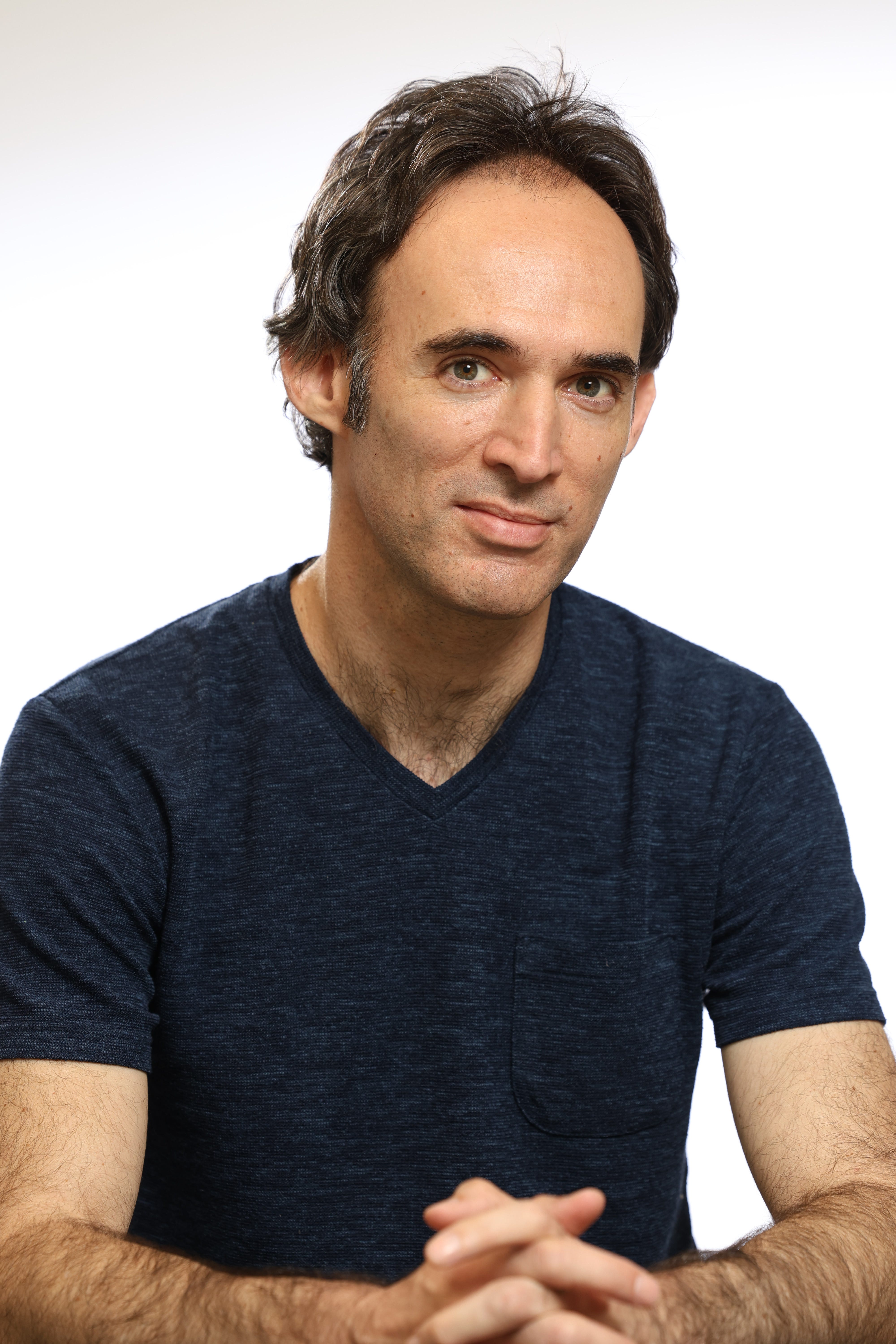
So far, Rechavi has had no shortage of interesting projects. Much of his work focuses on the nematode Caenorhabditis elegans, which he uses to study the transgenerational inheritance of small, non-coding RNA molecules. These non-coding RNAs are “short sequences of RNA, typically between 20 and 30 nucleotides long, but there’s some variation,” explains Rechavi. “And what they do is regulate gene activity, in almost all cases, by inhibiting gene expression.”
Rechavi’s lab has shown that these non-coding RNAs can carry information about an organism’s experiences—such as starvation or viral infection—across multiple generations. In other words, the offspring of a C. elegans worm exposed to stressors can inherit molecular “memories” of those experiences and alter their own gene expression accordingly.
These findings highlight how epigenetic inheritance can influence biology beyond the DNA sequence. By showing that environmental factors can shape gene regulation in future generations, Rechavi’s work expands our understanding of heredity and raises new questions about how organisms adapt. You can hear Rechavi talk more about this line of work in our most recent episode.
Rechavi’s work with C. elegans is far from being his only unusual research project. In one especially surprising study, his team repurposed the parasite Toxoplasma gondii—best-known for infecting the brains of humans and other animals—as a tool for delivering therapeutic proteins to neurons.
One of the ways that T. gondii can infect the brain is by directly crossing the blood-brain barrier and using specialized organelles to secrete proteins into host cells. By engineering the parasite’s natural secretion system, the researchers were able to direct it to carry and release desirable proteins inside brain cells. This modification required reprogramming Toxoplasma’s complex machinery so that, instead of injecting its own virulence factors into host cells, it could deliver carefully chosen therapeutic proteins. The team demonstrated that the modified parasites could successfully enter neurons and secrete multiple large proteins, which is something that has been notoriously difficult to achieve with existing delivery methods.
Because neurons are so delicate and well-protected by the blood–brain barrier, delivering proteins or gene-editing tools directly into them has long been a major technical hurdle. Rechavi and colleagues’ approach turns that challenge on its head by using a natural invader as a delivery system, transforming a disease-causing organism into a potential ally for treating neurological disorders. While the work is still in its very early stages—limited to proof-of-concept experiments in cells and model systems—it hints at a fascinating new direction for how we might someday reach the brain’s most inaccessible regions.
Further afield, Rechavi has also contributed to research addressing some of the mysteries surrounding the Dead Sea Scrolls. In a project that blended genetics, archaeology, and biblical scholarship, Rechavi and colleagues sequenced the DNA of the animal skins that were used to make the ancient scrolls. By comparing genetic material from different fragments, they were able to determine which pieces came from the same animal—and, by extension, which fragments likely belonged to the same manuscript. This work helped clarify relationships among the scrolls and suggested that some were produced outside Qumran (the site where the scrolls were originally found in 1947), revealing a more complex origin story than previously thought.
With respect to radical, creative science, Rechavi certainly practices what he preaches. And while he acknowledges that this creative element of science doesn’t motivate everyone in the same way, he does think there are ways to promote creativity and risk-taking in scientific research.
“One of the things that reduces the creativity and spontaneity and fun of science is how we publish, what is a paper,” he says. A big part of the problem, Rechavi thinks, is the peer review process.
“Yes, it improves the work, but it’s a torturous thing that takes forever. It’s inefficient. It’s biased…But we need it. We need feedback.” Enter q.e.d. Science, a critical thinking AI tool that Rechavi and colleagues developed to provide researchers with instant feedback on manuscripts.
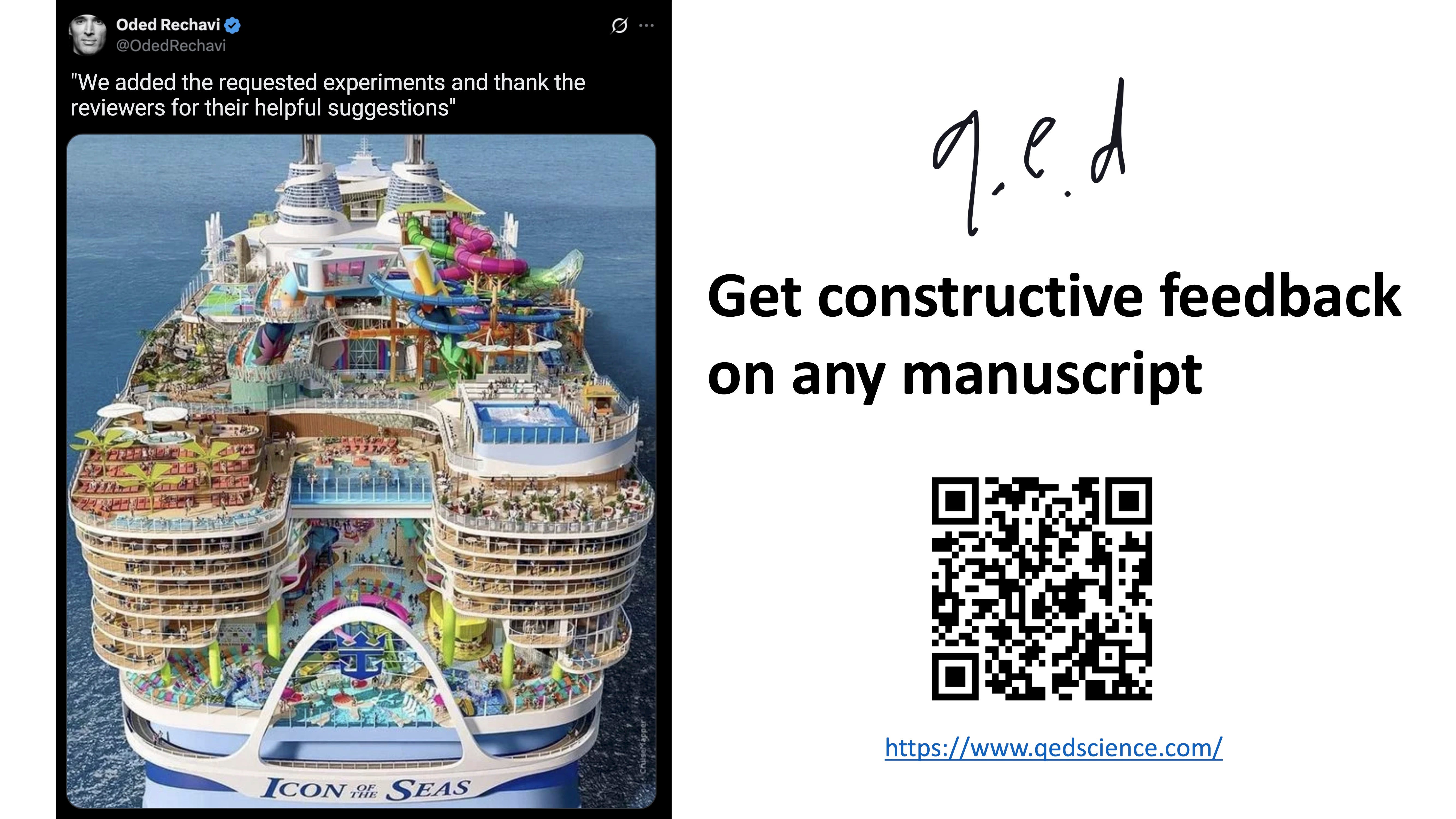
The platform is designed not to replace human reviewers, but to complement them—offering rapid, objective analysis of a paper’s reasoning, structure, and evidence before it even enters the formal review process. Rechavi sees tools like q.e.d. Science as a way to make publishing more transparent and efficient, while also freeing human reviewers to focus on deeper scientific questions rather than technical details. He also hopes innovations like this could pave the way for a scientific culture where publishing negative or inconclusive results becomes as valued as sharing major breakthroughs.
Ultimately, Rechavi’s work—and the spirit behind it—serve as a reminder that the best science often begins with a willingness to think differently, take risks, and follow ideas that others might find a little strange. From worms to brain parasites to ancient biblical artifacts, you never know where they might lead.
Thank you editor for spending time writing this super useful primer!